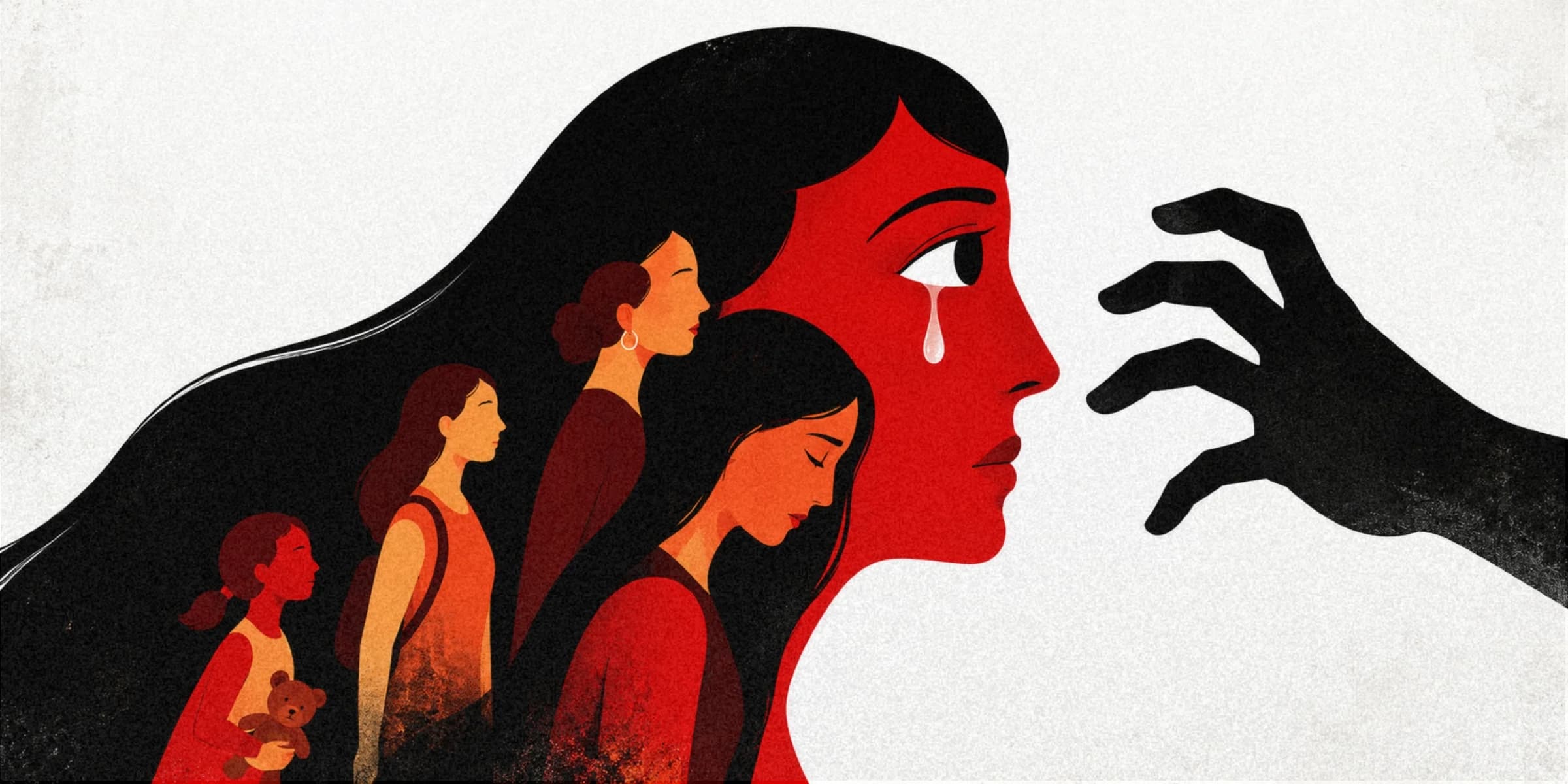
Twenty-four thousand cases in one year, and two words we use to make that bearable
The National Crime Records Bureau recorded 24,923 rapes in India in 2012. That is the reported figure, which everybody working in this area agrees is a fraction of the real one, because most women who are assaulted in this country never go near a police station and have sound reasons.
Last month a five year old in Delhi. Before that, December. Each time the same sequence runs: the story breaks, there is genuine national fury, there are dharnas, the politicians condemn it on television, and about two weeks later most of us are back to our routine because it did not happen to anyone we know.
We have a phrase for that stage. Chalta hai. It goes on. What can I really do.
Chalta hai. It goes on. What can I really do.
The two words this piece is about
Why nothing changes
My pastor read this verse out a few Sundays ago and I have not been able to put it down since.
Because sentence against an evil work is not executed speedily, therefore the heart of the sons of men is fully set in them to do evil.
Three thousand years old, and it describes our courts exactly. Cases run for a decade and more. Men grow old and die without ever seeing the inside of a jail. Solomon is not making a moral point there, he is making an observational one about what delay does to a population: when consequence is theoretical, people calculate that they will get away with it, and they are usually correct.
So the law needs to work faster. That is a real demand and worth making noisily. But I have stopped believing it is the first problem.
The thing underneath
A man who assaults a woman has already decided, long before that evening, that she is a thing rather than a person. Nobody arrives at that conclusion in the moment. It is assembled slowly, out of a thousand small permissions in a culture that treats women as decoration and appetite as an entitlement, and it is assembled in the company of other men who never once contradicted him.
That is where I want to be careful, because the version of this argument I made the first time round was too quick. I blamed television and the internet, as though a screen produces a rapist. Millions of men watch the same material and do not do this. The screen is not the cause. What it does is confirm, in a man who is already going that way, that nobody around him thinks differently.
Which puts the responsibility somewhere much closer to home. Boys are formed by the men in the room. If a fourteen year old hears his uncles laugh at a comment about a girl on the street, he has just been taught something, and no youth camp is going to undo it in a weekend.
What the church actually has
We tend to respond to this with a call to prayer and moral education, and I am not against either. But the specific thing Christians are holding is not a stricter rule. Every religion in India already has the rule.
What we are holding is that a person can be made new, and that this is a gift rather than a reformation project.
Therefore if any man be in Christ, he is a new creature: old things are passed away; behold, all things are become new.
A man who has genuinely received that does not look at a woman the way he did, and he does not get there by gritting his teeth. It works from the inside out or it does not work. This is the one contribution the church can make that the law cannot, and we mostly waste it by preaching rules instead.
And the two words
Chalta hai is not indifference. It is a conclusion about whether anything you do makes a difference, and it is the reason a corridor full of people can watch something and film it.
So pray for this country and expect an answer. Then be the man in the room who does not laugh.

Premasis Satman
Founder and Executive Director of 5Talents Magazine, writing from Hyderabad. He has written the magazine's editorial column since the first issue in July 2012.
India · Violence against women · Justice · Editorial · Point of view